Gallery
Domoheon
도모헌

⟪디지털 서브컬처: 디지털 시대의 내러티브와 스토리⟫
참여작가: 나이스앤티스, 아르비주, 메트로노본, 에드 카, 루시아 팜, 차웅산, 린 하네다 × 필 아트 AI, 켈리 보쉬, 리버, 차밍 컴퓨터, 니콜라스 달위츠, 데이비드 사우더, 이오시프 그키니스, 필 아트 AI
전시기간: 2026. 5. 28. ~ 6. 28.
※ 본 전시는 6월 동안 도모헌에서 이어서 상영됩니다.
(관람 시간: 월~금: 10:00–18:00 / 토: 10:00–20:00)
동시대는 아날로그에서 디지털로 이행하는 전환의 시기이다. 4차 산업혁명에 따른 다양한 사회 변화 속에서 동영상 문화 또한 전복적으로 변화하고 있다.
19세기 산업혁명기, 루이 다게르의 사진술과 에드워드 마이브리지의 연속사진 촬영술을 거쳐 토머스 에디슨의 ‘키네토스코프(Kinetoscope)’와 뤼미에르 형제의 ‘시네마토그라프(Cinématographe)’에 이르는 활동사진술의 발명을 시작으로, 비디오와 영화 등 동영상 문화는 사회 전반에 침투하며 우리 삶의 일부가 되어버렸다.
20세기, 자본주의의 경제적 효용성은 다수인의 관람이 가능한 ‘공적 공감’의 시네마토그라프 시스템을 영상산업의 기술적 표준으로 만들었다. 이에 1인 관람만이 가능한 ‘사적 감응’의 키네토스코프 시스템은 자연스레 도태되어 버리고 만다.
21세기, 동시대, 모바일 폰, 퍼스널 컴퓨터, 디지털 디스플레이 등과 같은 신 디지털 기술은 대중에게 동영상을 수용할 수 있는 매개 접점(moving image platforms)을 무한으로 확장, 제공하고 있다. 이러한 미디어 생태계의 변화는 아이러니하게도 다수인 경험의 시네마토그라프 방식을 소외시키며 1인 경험의 키네토스코프 방식을 재소환하고 있다. 이제는 시공간의 제약 없이 어디에서든 동영상 콘텐츠를 개개인이 주체적으로 선택하고 이를 사유할 수 있는 더욱 민주적인 영상문화 시대가 도래한 것이다.
시네마틱 영화산업(메가박스, MGM 등)은 노쇠하며 OTT (넷플릭스, 유튜브 등) 기반의 영상산업이 번창하고 있는 사회현상은 대표적인 예이다. 다시 말하면 우리는 ‘네오-키네토스코프(Neo-Kinetoscope)’ 영상 문화로의 개념적 전환을 맞이하고 있는 것이다.
이처럼 네오-키네토스코프의 개념이 가시화된 사회 환경 속에서, 당연히, 프레임, 쇼트, 씬, 시퀀스, 플롯, 내러티브와 같은 영상의 교과서적인 기본 구조는 해체되고 재구성되고 있다. 특히 영상의 내러티브와 스토리는 동시대의 네오-키네토스코프 영역에서 ‘숏폼(short-form)’과 ‘릴스(reels)’ 등과 같은 새로운 문화 현상을 발현, 창궐시키고 있다. 이 영역 안에서 비록 영상의 ‘러닝타임’이 물리적으로 압축되는 듯 보이지만, 오히려 개개인의 정신적 상상은 다면적으로 확장되고 공적 공감은 사적 감응으로 이동하며 선형적 시간은 비선형적으로 파편화된다. 이에 본 전시는 다음과 같은 질문을 던진다:
선형적이고 연속적인 구조를 전제로 했던 기존의 내러티브에서 벗어나, 압축되고 분절된 파편적 구성으로 나타나는 내러티브는 과연 스토리를 물리적으로 축약한 결과에 불과한 것일까? 이때의 시간성은 단지 형식적 제약에 따라 압축되고 축소된 것인가?
반대로, 이러한 변화 속에서 새롭게 출현한 짧은 내러티브의 영상 문화 양상은 오히려 관람자의 확장된 인지적 감응에 의한 것은 아닐까? 즉, 완결된 구조에 의해 제한되었던 과거와 달리, 이러한 내러티브는 짧은 시간 안에서 기억과 감정, 심리적·정동적 경험이 중첩되며 주체적 감응을 확장하는, 또 다른 비선형적 시간성의 가능성을 제시하는 것은 아닐까?
이러한 문제의식을 탐구하고자, 본 전시는 ‘디지털 서브컬처: 디지털 시대의 내러티브와 스토리’라는 주제 아래 디지털 시대의 내러티브 조건을 둘러싼 새로운 담론을 함께 사유하고 논의하기 위한 장을 마련하고자 한다.
⟪Digital Subculture: Narrative and Story in the Digital Era⟫
Artist(s): niceaunties, Arvizu, metronovon, Edd Carr, Lucia Pham, Robert Cha, Rin Haneda × Pillart AI, Kelly Boesch, Liber, Charming Computer, Nicholas Dallwitz(Florigenix), David Szauder, iosif Gkinis(Scifiscapes), Pillart AI
Exhibition Period: 2026. 5. 28. ~ 6. 28.
※ The exhibition will remain on view at Domoheon throughout June.
(Hours : Mon–Fri: 10:00 AM–6:00 PM / Sat: 10:00 AM–8:00 PM)
The contemporary era is defined by the transition from analog to digital. Under the multifaceted societal shifts of the Fourth Industrial Revolution, moving image culture is also undergoing a subversive transformation.
Amid the Industrial Revolution—beginning with Louis Daguerre’s early practical photographic process and Eadweard Muybridge’s motion studies through sequential photography, and leading to the invention of motion photography via Thomas Edison’s “Kinetoscope” and the Lumière brothers’ “Cinématographe”—from the 19th century, moving images pioneered, with its culture such as videos and films permeating society and becoming integral to daily life.
By the 20th century, the economic utility of capitalism established the Cinématographe system, which allowed for mass spectatorship and generated collective empathy, as the technical standard of the video industry. Consequently, the Kinetoscope system designed for private effect (single-person viewing) was naturally phased out.
In the 21st century, the contemporary age, new digital technologies such as mobile phones, personal computers, and digital displays have infinitely expanded the moving image platforms through which the public accesses and receives content. This transformation of the media ecosystem, somewhat ironically, is re-summoning the Kinetoscope method of individual experience while marginalizing the Cinématographe method grounded in collective experience. That is to say, we have now arrived at a more democratic era of video culture, where individuals can independently select and contemplate video content anywhere, free from the constraints of time and space.
This social phenomenon is clearly exemplified by the decline of the cinematic film industry (e.g., Megabox, MGM) and the flourishing of OTT-based industries (e.g., Netflix, YouTube). In other words, we are facing a conceptual shift toward a “Neo-Kinetoscope” video culture.
As this concept of the Neo-Kinetoscope becomes visible within our social environment, the orthodox, textbook-standard structures of video, including frame, shot, scene, sequence, plot, and narrative, are naturally being dismantled and reconstructed. Particularly, within the domain of the Neo-Kinetoscope, video narrative and story are manifesting as new cultural phenomena like “short-form” and “reels.”
In this realm, although the running time of the video appears physically compressed, the mental imagination of the individual is, rather, expanding multi-dimensionally; collective empathy shifts toward private affect, and linear time is fragmented into non-linear forms. In response, this exhibition poses the following questions:
Is the narrative appearing in compressed and fragmented configurations, departing from the existing ones premised on linear and consecutive structures, merely the result of physically condensing the story? Is temporality in this context simply reduced according to formal constraints?
Or, conversely, could this newly emerging aspect of short-narrative video culture rather be the result of the viewers’ expanded cognitive response? Unlike the narrative of the past, limited by a completed structure, might these narratives offer new possibilities for non-linear temporality—where memory, emotion, and psychological/affective experiences overlap within a brief duration to expand the subject’s internal response?
To explore these critical concerns, this exhibition, under the theme Digital Subculture: Narrative and Story in the Digital Era, provides a site to discuss the new discourses surrounding the conditions of narrative in the digital age.
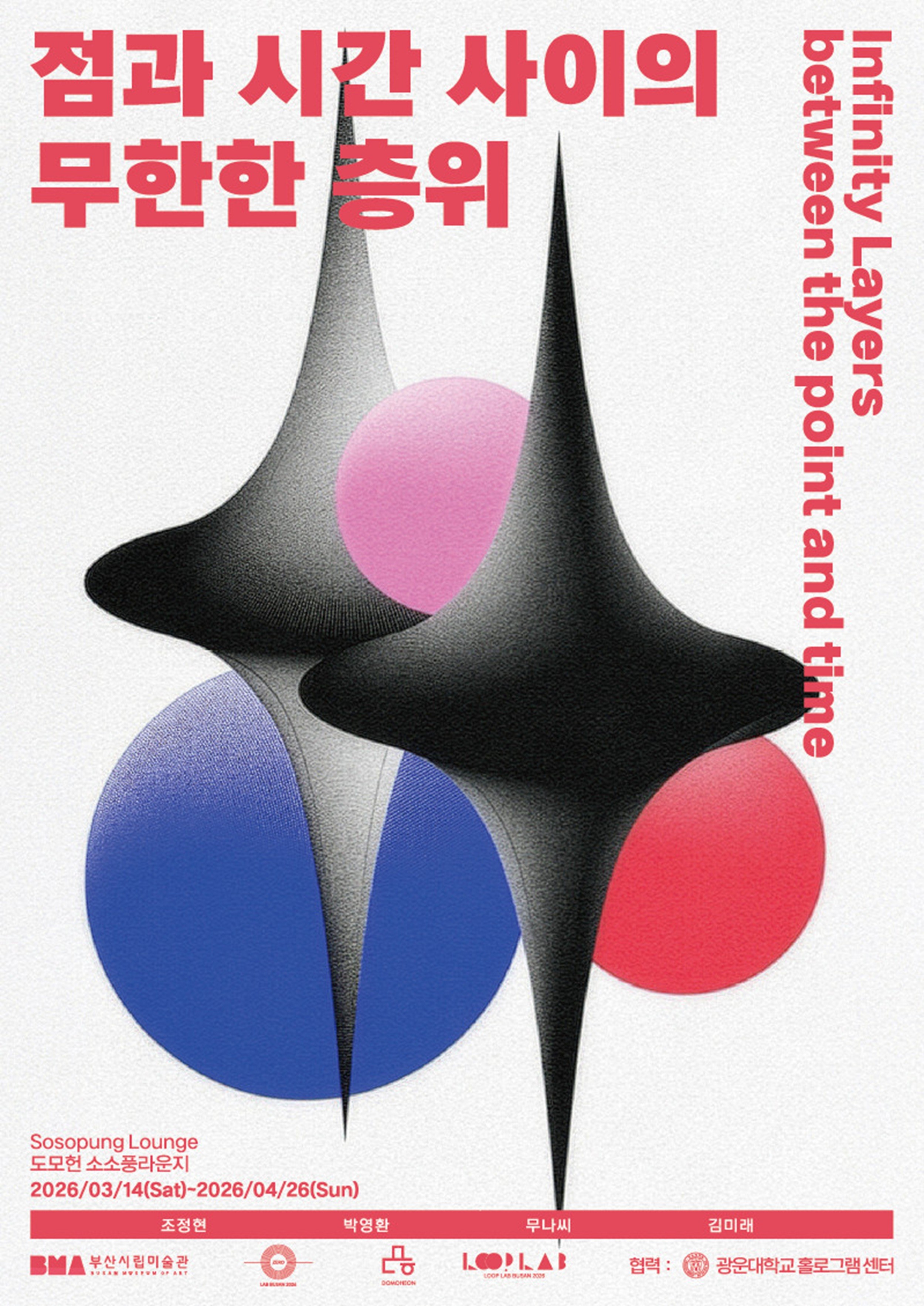
⟪점과 시간 사이의 무한한 층위⟫
참여작가: 김미래, 무나씨, 박영환, 조정현
전시기간: 2026. 3. 14. ~ 4. 26.
운영시간: 화-일 10:00-18:00 (17:00 입장마감 & 매주 월요일 휴무, 월요일이 공휴일인 경우 그 다음 평일 휴관)
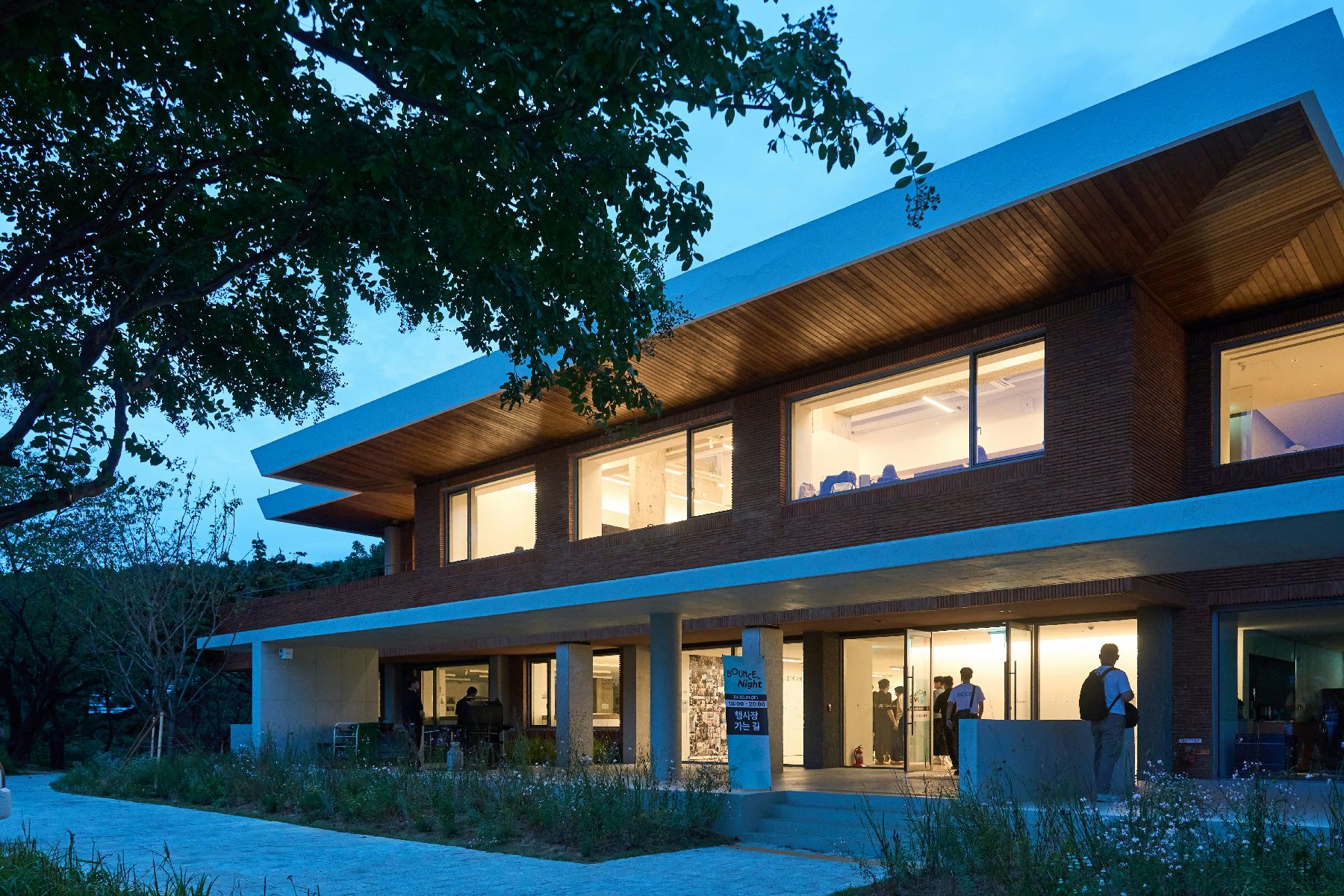
도모헌은 1984년 처음 건축되어 과거 대통령의 지방 숙소로 사용되었으며 이후에는 부산시장 공관으로 사용된 곳이었으나 정원, 생태연못 그리고 다양한 회의시설과 강연장 등을 마련한 공간으로 탈바꿈되여 2024년부터 비로소 시민을 위한 공적 공간이 되었다. ⟪점과 시간 사이의 무한한 층위⟫ 전시는 평면화를 주요 매체로 활용하는 김미래, 무나씨, 박영환, 조정현 작가가 참여한다. 이들의 작업에서 유사하게 보이는 미적 문맥 중 하나는 3차원의 공간성과 4차원의 시간성을 하나의 화면에 응축하려는 시도이다. 이로 인해 이들의 작업에서는 다면적 층위의 서사(Layer)들이 서로 겹쳐지며 다차원의 시공을 창출한다.
《Infinite Layers Between Point and Time》
Artist(s): Mirae Kim, Moonassi, Park Young Hwan, Cho Jung Hyun
Exhibition Period: 2026. 3. 14. ~ 4. 26.
Operating Hours: Tue-Sun, 10:00-18:00 (Last admission: 17:00 / Closed every Monday, but if Monday falls on a public holiday, it will be closed on the following weekday.)
Domoheon, a former presidential and mayoral residence, was reborn as a public cultural space in 2024. The exhibition Infinite Layers Between Point and Time features artist Mirae Kim, Moonassi, Park Young Hwan, Cho Jung Hyun, who condense multi-dimensional narratives of space and time into flat canvases to create a layered, transcendental experience.